Documentary Production Services in Thailand & Southeast Asia

We make documentaries worldwide. Some are Mean Mama originals. Others come to us as commissions from UN agencies and international organisations, or as part of global communications campaigns that need a strong film at the centre. Women are often at the heart of our work: their lives, rights, work, choices and power. We also provide documentary production support worldwide, from research, access and contributors to crews, permits and local production. We know how to work with sensitive subjects, complex stakeholders and real people, and still make a film people actually want to watch.

DOCUMENTARIES FOR UN AGENCIES AND INTERNATIONAL ORGANISATIONS

Before founding Mean Mama Films, Daria Kopach produced and directed documentary and campaign films for UN Women, UNICEF, UNDP, UN Environment and UN DOALOS in more than 20 countries, and the films below are part of that work. Most of them are about women, and a lot of them deal with violence, poverty or disaster, which usually means the people on screen have been through something and the client has a long approval chain.


WORKING WITH THE UN REVIEW CHAIN

A UN film has to satisfy a country office, a regional office, headquarters, donors and the people on screen, all at the same time (and they don't always agree). We plan consent, safeguarding and approvals into the schedule from the first call, so the edit doesn't get stuck waiting for the last signature.


Photo by Jacob
Photo by Leio
client \ un women
locations \ india \ mexico \ jordan \ chile \ australia \ cameroon \ switzerland
00-1/
X
00-2/
Activists in Central Asia break ground in fight against violence
X
Producer, director 2018
Second Chance Education is UN Women’s programme, funded by the BHP Foundation, for women who missed out on education and want to return to learning, find work or start a business. Offering training is part of it, but the circumstances that interrupted someone’s education don’t disappear when she enrols in a course. Caring responsibilities, money and expectations about women’s roles still affect whether she can attend, finish and use what she has learned. The programme works on those barriers too.

Daria made the global documentary about SCE to show what that work means in women’s lives. There was a practical communication task: donors and governments need to understand what the programme does and why it deserves their support. There was also the responsibility of telling someone’s story within a film that has an institutional purpose. A woman can speak about what education has changed for her without her whole life becoming evidence that a programme works. That was the balance the documentary had to find.
00-2/
X
client \ UN women
location \ Turkey
client \ un women
locations \ kosovo \ bosnia and herzegovina \ servia \ turkyie \ tajikistan \ albania \ north macedonia \ kazakhstan
client \ UN women
location \ Turkey
client \ UNicef
location \ mozambique
client \ UN DOALOS
location \ cameroon
location \ thailand
00-6/
X
00-9/
exile and
the kingdom
X
00-7/
ocean governance in the gulf of guinea
X
00-5/
UNICEF’s efforts amid cyclone crisis
X
client \ unDP
locations \ kazakhstan \ uzbekistan \ kyrgyz republic
00-4/
X
00-8/
Lighting Vietnam
X
client \ un Environment
locations \ vietnam \ thailand
Nazira
2020
Gupse Özay
2021
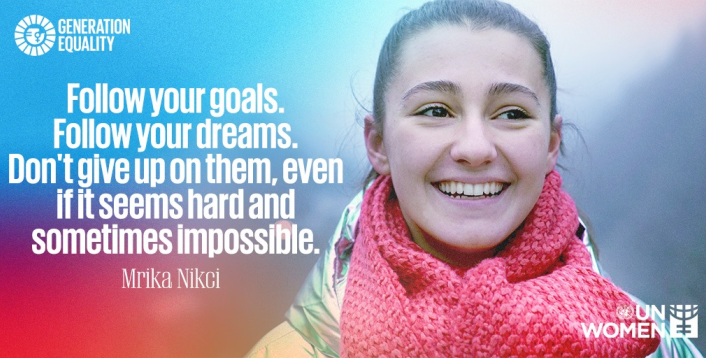
Mrika Nikçi
2020
Veronika Fonova
2020
Raykhan
2020
Irina
2020
Global campaign video
2021
Ramat's second chance
2021
Anju's second chance
2021
Kavita's s second chance
2021
Nandini's second chance
2021
Harshadat's second chance
2021
Sarita's second chance
2021
Sukanti's second chance
2021
Women on the path towards empowerment
2020
Programa Segunda Oportunidad
2021
Gupse Özay is a Turkish actress, screenwriter and director, best known for comedy, and the UN Women story about her is called, quite accurately, "A woman comedian fights stereotypes in Turkish films." Daria filmed her profile for Generation Equality in Türkiye. A famous face on social media gets watched, but only for a minute, so the film had to be short, funny where she was funny and still clear about why UN Women was telling her story.
Generation Equality was UN Women's campaign for the 25th anniversary of the Beijing Declaration in 2020, and the Europe and Central Asia office wanted it told through women from the region. Daria produced video profiles and 18 feature stories from Kosovo, Albania, North Macedonia, Bosnia and Herzegovina, Serbia, Türkiye, Tajikistan and Kazakhstan. Among them are Mrika Nikçi from Kosovo, the youngest woman in the world to climb the seven highest peaks on seven continents, and Veronika Fonova, a feminist activist in Almaty. Every cut went through the regional office, which is normal for the UN, and we plan the schedule around it from the first call. Daria also photographed the women she interviewed, creating a series of portraits to accompany the films and written stories. View the photography series.
For #HearMeToo and the 16 Days of Activism against Gender-Based Violence, UNDP brought Daria to Kazakhstan, Uzbekistan and the Kyrgyz Republic in 2018. She filmed Irina Matvienko, whose Facebook page nemolchi.uz publishes stories of violence from women in Uzbekistan; Raykhan, who runs a crisis centre for survivors in Aktau and had to apply four times just to register it; and Nazira, a lawyer in Bishkek who represents survivors for free. UNDP's figures were nearly 30% of women in the Kyrgyz Republic and 20% in Kazakhstan reporting violence from men, mostly partners. In survivor-centred filming the women decide what is shown and what isn't. It takes longer, and we budget for that.
Cyclone Idai hit Beira and the Sofala region of Mozambique in March 2019, and with the floods that followed UNICEF counted about a million children affected. On an emergency shoot we keep the crew small, stay out of the way of the people doing the actual work, take consent seriously with families who have just lost their homes and get the footage out fast, because appeals raise most of their money in the first weeks.
Bahar Toksoy Guidetti played at the top of Turkish volleyball and for the national team, and then turned to getting girls into sport. Daria filmed her for UN Women in Türkiye as part of Generation Equality. Sport shows very quickly who gets a chance and who doesn't, and a national team player saying it on camera is heard by people who will never read a report.
Cameroon has about 400 km of coastline on the Gulf of Guinea, with fisheries, ports, illegal fishing, piracy and several institutions that each manage their own piece of the sea. UN DOALOS, the UN Division for Ocean Affairs and the Law of the Sea, works with the country on ocean governance in a programme funded by Norway, and Daria made the film about it in Cameroon. The law of the sea mostly lives in legal texts and committee rooms, and the point of the film was to show what it means on the coast.
Exile and the Kingdom is an independent documentary project by Daria Kopach and Kahina Ahcene, made during Bangkok’s lockdown in 2020. With everyday life interrupted and little certainty about what would follow, they interviewed people who had something to say about the positive change that could come out of the pandemic.

The conversations brought together Mohammad Naciri, then UN Women’s Regional Director for Asia and the Pacific; Natalie Narkprasert, founder of COVID Thailand Aid; leadership coach Isabel Valle; and entrepreneur and digital consultant Sarah Huang. Their experience ranged from international policy to organising help for people who needed it immediately, from supporting teams through uncertainty to building businesses. That gave the project a starting point for a much bigger question: what could change after the pandemic, and who would do the work to make it happen?
Lighting Vietnam is a short documentary and PSA for UN Environment about a GEF-funded project that replaced more than 60 million incandescent bulbs in Viet Nam with efficient lamps and tested LED lighting on fishing boats, cutting their energy use by 60 to 75%. It was shot in Vietnam and Thailand. Energy efficiency is about as exciting on paper as it sounds, which is exactly why it needs a good film.

DOCUMENTARY PRODUCTION IN THAILAND:

frequently asked questions

CALL MAMA!
Tell us what you are making, roughly when, and where do you want to film it. If your decision is happening this week, use WhatsApp or Telegram.